
Award-Winning Research by London Cardiologists Dr Anthony Li & Dr Anna Marciniak
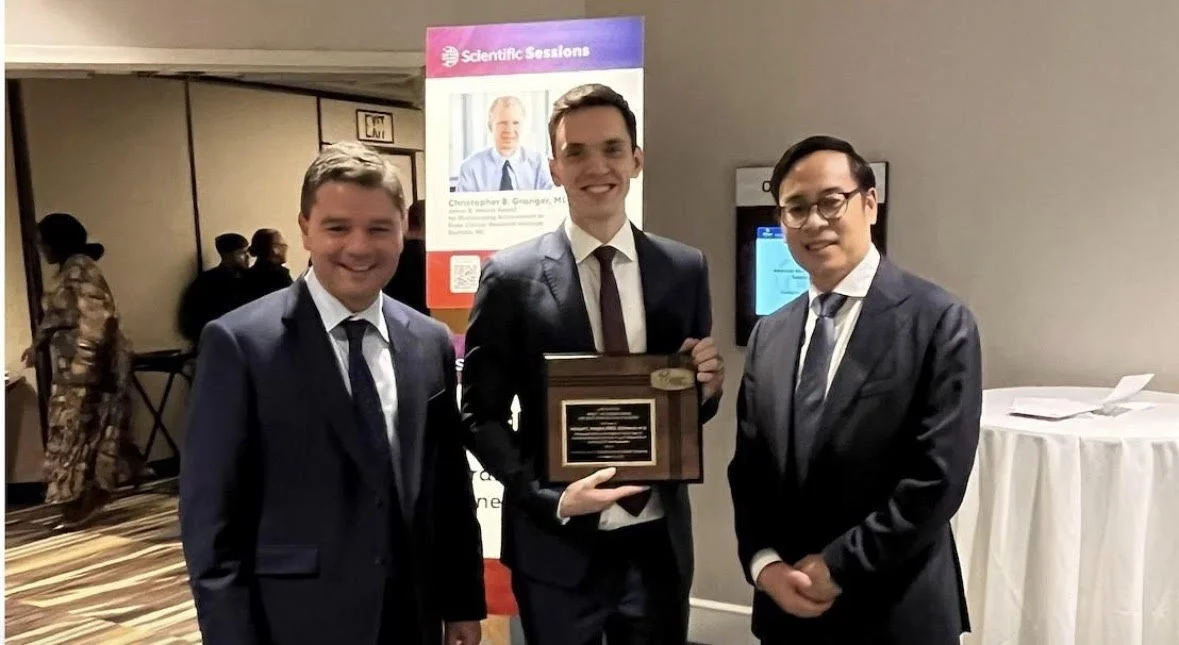
Dr Li (right) with Dr Saba (left) and their research student Dr Waight collecting the award in New Orleans, November 2025
Research involving London cardiologist Dr Anthony Li, Dr Anna Marciniak and colleagues has received international recognition after being awarded the James T. Willerson Award in Clinical Science from the American Heart Association. The study, undertaken by PhD student Michael Waight, cosupervised by Dr Li with Dr Magdi Saba from St George’s University London, in collaboration with Natalia Trayanova from Johns Hopkins University, has been published in Circulation one of the world’s most respected cardiology journals.
The award recognises the best clinical cardiovascular research of the year, and this achievement marks the first time a UK researcher has received the prize — highlighting the global impact of work being carried out by heart rhythm specialists in London.
Digital Twin Technology: A New Approach to Treating Dangerous Heart Rhythms
The research focuses on an innovative technology known as a digital twin of the heart. Using advanced cardiac imaging such as MRI scans, doctors can create a highly detailed computer model that replicates a patient’s own heart anatomy and electrical activity.
This virtual heart can then be used to simulate dangerous arrhythmias such as Ventricular Tachycardia, a potentially life-threatening fast heart rhythm that often develops in patients with heart scarring or previous heart disease.
By recreating these abnormal rhythms digitally, Dr Li and team can identify the precise areas of heart tissue responsible for triggering the arrhythmia before treatment even begins.
Improving Ventricular Tachycardia Treatment
In the study, digital heart models were created for patients undergoing Catheter Ablation, a procedure used by specialist heart rhythm doctors to treat abnormal heart rhythms.
The computer simulations successfully predicted many of the abnormal electrical circuits that were later identified during the procedure itself. This approach could help cardiologists plan treatment more accurately, particularly for patients with complex ventricular tachycardia.
Potential benefits include:
More precise ablation procedures
Shorter procedure times
Improved outcomes for patients with complex arrhythmias
More personalised treatment planning
Advancing Heart Rhythm Care in London
Heart rhythm disorders affect thousands of patients each year, and innovations such as digital twin technology could play an important role in the future of personalised arrhythmia treatment.
The international recognition from the American Heart Association highlights the importance of this work and reflects the growing role of London cardiologists in advancing global research into heart rhythm disorders.
For patients with ventricular tachycardia or other arrhythmias, developments like these offer hope for more precise, personalised treatments in the future.