

Transcatheter Aortic Valve Implantation (TAVI)
A less invasive option for treating aortic valve disease
At London Heart Group, our expert cardiologists provide personalised care for patients with heart valve disease. One of the most innovative treatments we offer is TAVI, a minimally invasive procedure to replace a narrowed aortic valve. This page explains what TAVI is, who it’s for, and why it may be a better option than traditional open-heart surgery for some patients.
What is TAVI?
The aortic valve controls blood flow from the heart to the body. When it becomes narrowed (a condition called aortic stenosis), the heart has to work harder to pump blood, which can lead to:
Shortness of breath
Chest pain (angina)
Fatigue and weakness
Fainting or dizziness
Heart failure if untreated
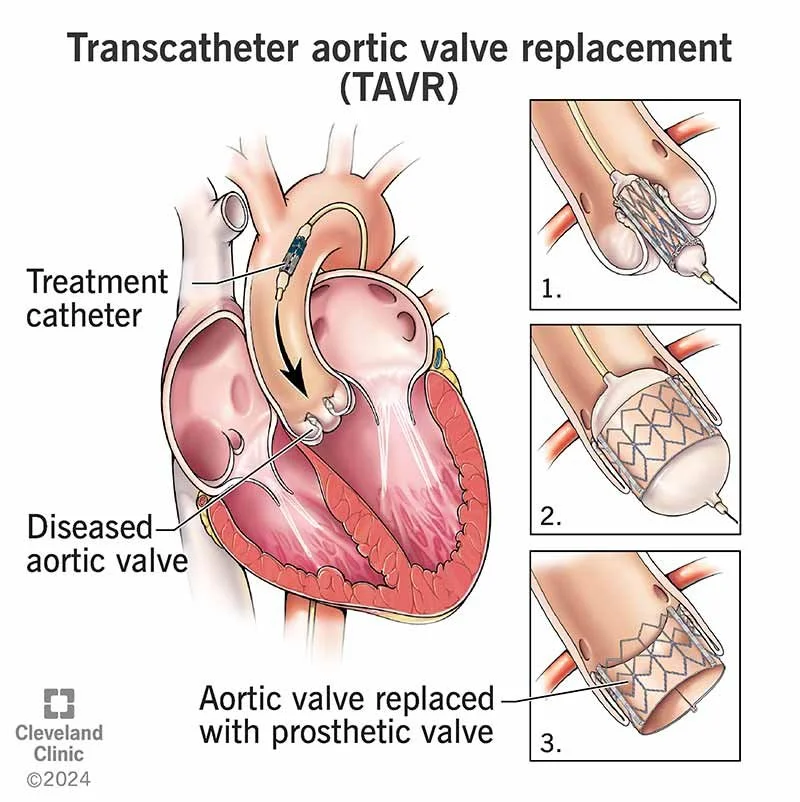
TAVI is a procedure that allows the aortic valve to be replaced without open-heart surgery. Instead, a new valve is delivered via a catheter inserted through a blood vessel, usually in the leg, and expanded inside the existing valve.
Why TAVI May Be Recommended
TAVI is often considered for patients who:
Are at high or intermediate risk from open-heart surgery
Have age-related or frailty-related concerns
Want a faster recovery with shorter hospital stays
Have other medical conditions that make traditional surgery riskier
Your cardiologist will perform detailed tests, including imaging and heart function assessment, to determine if TAVI is the safest and most effective option for you.
How the Procedure Works
A catheter is inserted into a blood vessel, usually in the groin or chest.
The new valve is guided to the heart and positioned inside the diseased aortic valve.
The valve is expanded and immediately begins to function, replacing the old valve.
The catheter is removed, and the access site is closed.
The procedure typically takes 1–2 hours, and most patients can sit up and move around within a day or two.
Safety and Follow-Up
TAVI is generally safe, with low rates of major complications. Possible risks include:
Bleeding or vascular complications at the insertion site
Temporary rhythm disturbances, sometimes requiring a pacemaker
Stroke (rare)
Valve leakage or malfunction (rare)
Follow-up care includes:
Heart imaging and check-ups
Medication review to reduce clotting or other risks
Ongoing monitoring of heart function
Why Choose London Heart Group for TAVI
Expert Heart Team – Consultant cardiologists and cardiac surgeons collaborate on every case
Personalised Assessment – Advanced imaging and risk evaluation ensure TAVI is suitable for you
Minimally Invasive Expertise – Access to the latest transcatheter technology
Comprehensive Aftercare – Dedicated follow-up to monitor valve function and overall heart health
Private London Clinic – Fast, convenient appointments with minimal waiting
Book a Consultation
If you have severe aortic stenosis or other valve disease and are interested in a less invasive alternative to open-heart surgery, our cardiologists can provide a personalised
assessment and discuss whether TAVI is the right option for you.
Call us on 0208 226 5888 or email enquiries@londonheartgroup.co.uk
Innovative, minimally invasive treatment to restore heart function and improve quality of life.