

Patent Foramen Ovale (PFO) Closure
PFO Closure - What it is and why it may be needed
At London Heart Group, our consultant cardiologists provide expert diagnosis and treatment for a range of heart conditions.
One procedure that can help certain patients prevent stroke or other complications is PFO closure. This page explains what it is, why it’s performed, and what to expect.
What is a PFO?
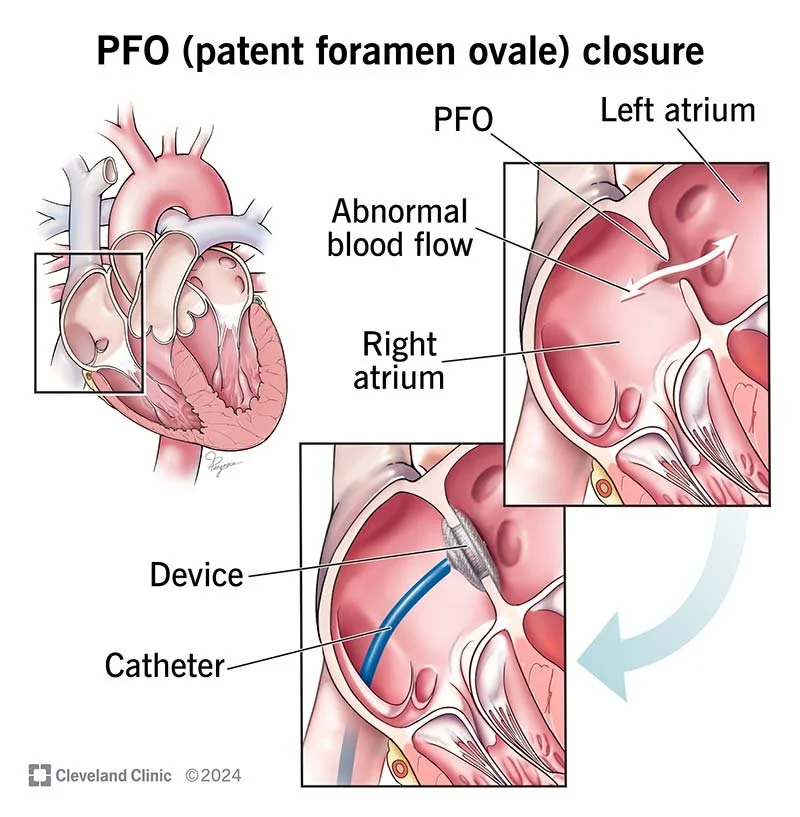
A patent foramen ovale (PFO) is a small, flap-like opening between the two upper chambers of the heart (the atria) that normally closes after birth. In around 25% of adults, this opening remains partially open, which usually causes no symptoms.
Most people with a PFO live their entire lives without problems, never knowing about it. However, in some cases, it can allow a small blood clot to pass from the right side of the heart to the left and then travel to the brain, causing a stroke or transient ischemic attack (TIA).
Why might a PFO need to be closed?
Closure of a PFO is considered in patients who have:
Experienced a cryptogenic stroke (a stroke with no other clear cause)
Had a TIA or transient neurological event linked to a PFO
Recurrent symptoms despite medication
Certain migraine conditions with aura (in selected cases)
Your cardiologist will carefully assess your heart and neurological history to determine if closure is appropriate.
How is PFO Closure Performed?
PFO closure is a minimally invasive procedure done under local anaesthesia with sedation or
general anaesthesia, usually through a vein in the groin:
A thin tube (catheter) is inserted into a vein and guided to the heart.
A closure device is positioned across the PFO to seal the opening.
The device is left in place permanently; over time, heart tissue grows over it.
The procedure typically takes 1–2 hours, and most patients go home the same day or the next.
Safety and Effectiveness
PFO closure is generally safe, with a low risk of complications.
Complications are uncommon but may include temporary heart rhythm disturbances, bleeding at the catheter site, or, rarely, device-related issues.
Long-term studies show that PFO closure significantly reduces the risk of recurrent stroke in selected patients compared with medication alone.
Your cardiologist will review your individual risks and ensure careful monitoring before, during, and after the procedure.
After the Procedure
Most patients return to normal activities within a few days.
Blood-thinning medication is usually prescribed temporarily to prevent clots.
Follow-up imaging and check-ups are arranged to ensure the device is well-positioned and the heart is functioning normally.
Book a Consultation
If you or a loved one has had a stroke or neurological event linked to a PFO, our cardiologists can assess whether PFO closure is the right option.
Call us on 0208 226 5888 or email enquiries@londonheartgroup.co.uk
Expert evaluation and treatment to protect your heart and brain health.