
Pacemaker Insertion in London
Expert care for slow heart rhythms and heart block
At London Heart Group, our experienced consultant cardiologists specialise in the assessment, implantation, and management of pacemakers — small, advanced devices that help keep your heart beating at a healthy rhythm.
If you’ve been diagnosed with a slow heartbeat (bradycardia) or heart rhythm disturbance, a pacemaker can restore your heart’s natural rhythm, reduce symptoms, and improve quality of life.
What Is a Pacemaker?
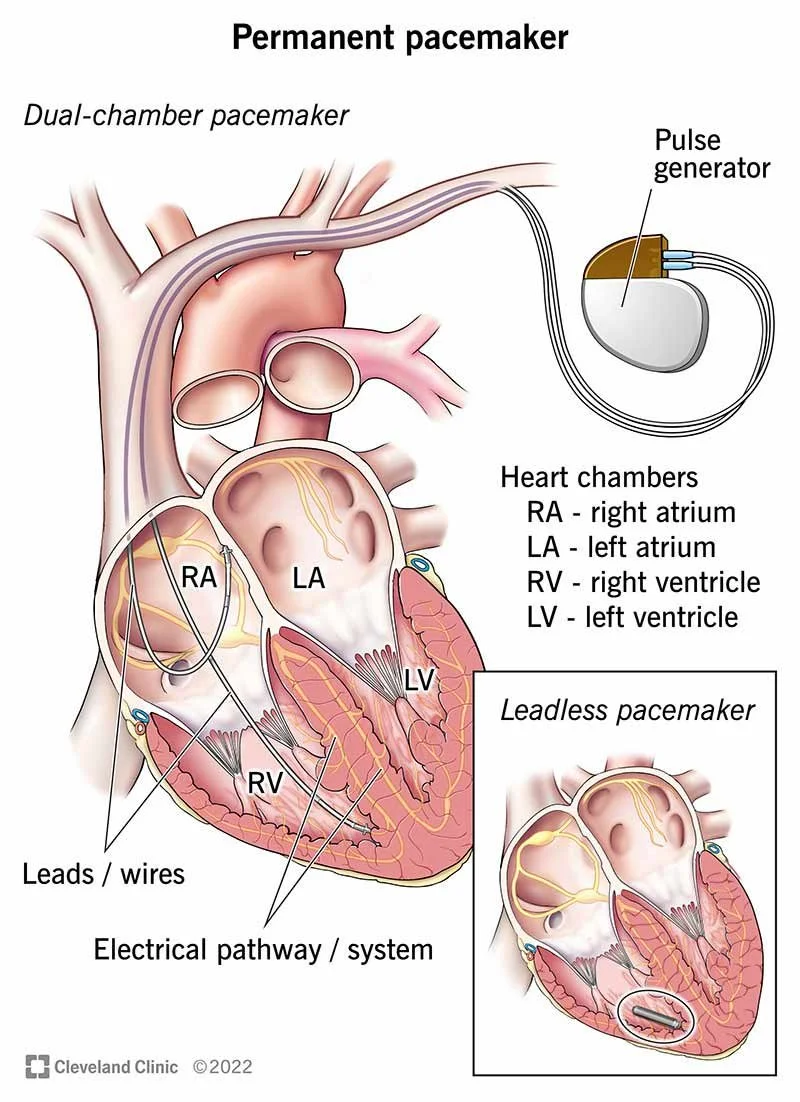
A pacemaker is a small electronic device placed under the skin, usually just below the collarbone. It sends gentle electrical signals to the heart to ensure it beats regularly and at the right speed.
The device consists of:
A battery and electronic circuit (the pacemaker itself)
One or more leads (thin insulated wires) that carry signals between the pacemaker and the heart muscle
These signals correct abnormal heart rhythms by prompting the heart to beat when it’s too slow or irregular.
Pacemaker implantation is a safe and routine procedure, typically performed under local anaesthetic with light sedation, allowing most patients to return home the same or next day.
Why You Might Need a Pacemaker
You may be advised to have a pacemaker if your heart rhythm is too slow or irregular due to conditions such as:
Bradycardia – a slow heart rate causing fatigue, dizziness, or fainting
Heart block – a delay or interruption in the electrical signals that control the heartbeat
Sick sinus syndrome – when the heart’s natural pacemaker (the sinus node) doesn’t work properly
After certain cardiac procedures or heart surgeries where rhythm problems develop
A pacemaker helps prevent symptoms such as fainting, tiredness, or breathlessness, and protects against sudden slowing or pauses in your heartbeat.
Types of Pacemakers
There are two main types of pacemakers used in modern cardiology practice:
Traditional (Lead-Based) Pacemakers
This is the most common type of pacemaker.
One or more leads (wires) are inserted through a vein and positioned inside the heart chambers.
The pacemaker box (battery unit) is placed under the skin below the collarbone and connected to the leads.
The leads sense your natural heartbeat and deliver electrical impulses when needed.
Lead-based pacemakers have an excellent safety record and can last 8–12 years before the battery needs replacing.
Leadless Pacemakers
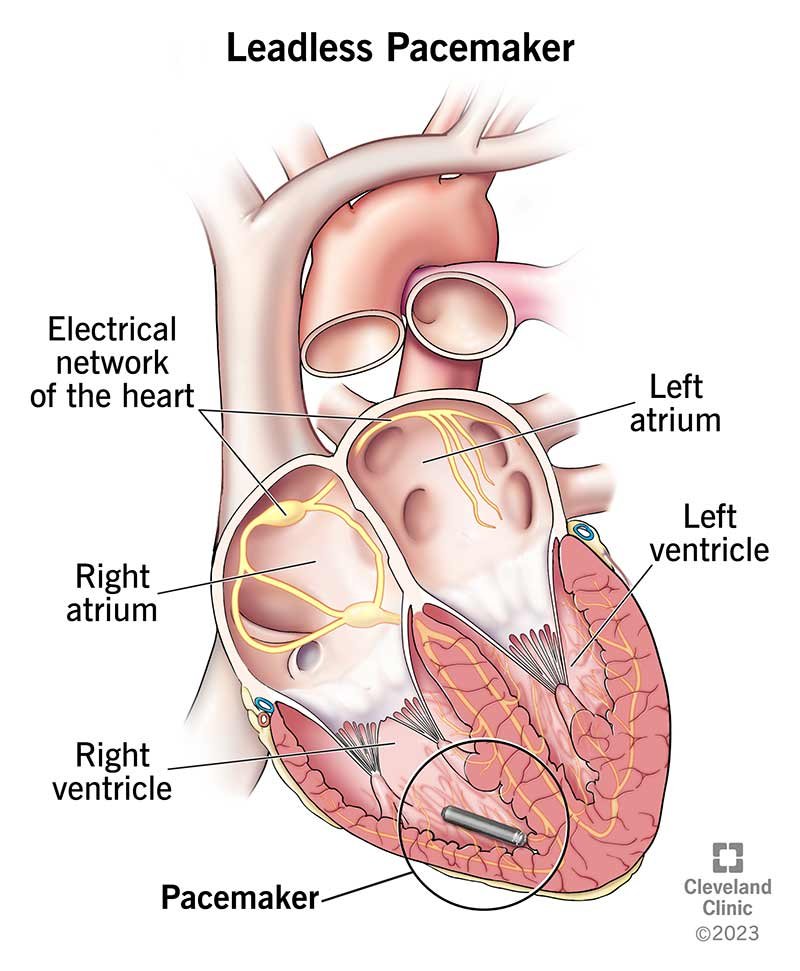
Leadless pacemakers are a newer, smaller, self-contained device implanted directly inside the heart via a minimally invasive
catheter procedure (usually through a vein in the leg).
Key benefits include:
No leads or chest incision – the device is entirely inside the heart
Reduced risk of infection or lead-related complications
Faster recovery and minimal scarring
Leadless pacemakers are ideal for selected patients who need pacing in one heart chamber (usually the right ventricle).
Your cardiologist will assess whether this modern, lead-free option is suitable for your condition.
How Safe Is Pacemaker Implantation?
Pacemaker implantation is considered a very safe and well-established procedure.
At London Heart Group, all procedures are performed by experienced consultant electrophysiologists in a specialist cardiac catheter laboratory with full cardiac monitoring and anaesthetic support.
The risk of serious complications is very low (less than 1–2%).
Minor side effects, such as bruising or mild discomfort at the implant site, usually settle within a few days.
Most patients return to normal daily activities within a week.
Pacemakers are checked regularly using non-invasive monitoring, either in-person or remotely.
Living with a Pacemaker
After implantation, your cardiologist will schedule regular follow-up checks to ensure your pacemaker is working perfectly. Modern devices are highly reliable and automatically adjust to your level of activity, ensuring your heart keeps up with your lifestyle.
You can continue to enjoy most everyday activities, including exercise and travel. Most modern pacemakers transfer data over to your consultant wirelessly, requiring less appointments for you. Your clinical team will explain any temporary restrictions, such as avoiding heavy lifting or certain medical scans (like MRI), depending on your device type.
Book in with London Heart Group
If you have symptoms such as dizziness, fainting, or an unusually slow heartbeat — or if you’ve been advised you may need a pacemaker — we’re here to help.
Call us on 0208 226 5888 or email enquiries@londonheartgroup.co.uk
Safe, advanced, and personalised treatment for slow heart rhythms – helping your heart beat strong and steady.